



Introduction about online learning brief:
 Technology keeps on changing. Change is life.
Online education brief classes are also known as teaching through E-Learning portals or Web Based E-Learning (WBEL).
In India WBEL is becoming popular because of two reasons:
- Affordability
- Buying capacity of Indians.
Reasons for acceptance are also due to
- Change in information technology
- Technological Improvements.
The objective of the Online education brief is to analyze the impact of E-learning or WBEL the latest Indian education system.
Details about Education System:
Present Status of Education Institutions in India:
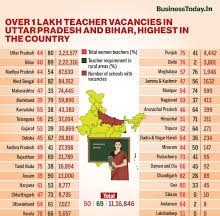
For a glimpse of status, DATA has been taken from the following website:
The Indian education system is the most complex and one of the largest education systems in the world. It has an important place in the global education industry.
The total number of Schools in India is 1,030,996,
While/, schools in urban areas are 8,53,184
Schools in rural areas are 1,77,812
As per Wikipedia
As of 2020 Total number of Universities in India is 1000
These exist in the following manner:
Central Universities=54
State Universities=416
Deemed Universities=125
Private Universities=361
AIIMS, IIMs, IITs, IISERs, and NITs=159
In spite of such a large number of Educational Institutions in India, there is still a demand and supply gap.
Problems in the Existing Education System in India:
India is a multilingual and multicultural country. Where the mother tongue of the teacher and students may or may not be the same. Because of this reason, it is facing the following problems:
Lack of interest in personalized learning
2. The communication gap is causing a learning gap and a loss
- Addiction for students and teachers to prevailing trends rather than accepting new technology
4. New technology demands changes in assessment methods which is a challenge difficult to accept by both the students and faculty
- E-books, e-tools, etc., are prepared by adults, which may or may not be suitable for the students and become a mental burden for the child.
- WBEL (Web-based E-Learning) demands a curriculum
7. New Technology demands upskilling and reskilling of teachers
Required Education System in India:
This era of Internet education demands a change in the overall working of the education system. This needs the following amendments:
- The importance to be given to skill development courses
- Digital learning platforms
- A grading system
- Use of educational technology in the classroom.
- Skilled faculty for using electronic online tools.
- Developments and applications of Educational Apps
Online education brief has the following needs:
- A paperless and electronic education system.
- It demands the use of information and technology. e.g., mobile with internet facility.
- This requires learning an educational curriculum, bypassing the prevailing board pattern.
Why adopt E-Learning in India:

The following are the reasons for India to opt E-learning Education System:
- On the Internet ocean of information is available, and students can access it via using information technology and the World Wide Web (WWW).
- WWW accessing tools have the benefit of flexible place and time to use. These tools are Mobile and Laptop.
- Following a gap prevails between two individuals in India;
- A large financial gap between communities in India.
- Differences in mother tongues, cultures, styles of living, etc.,
- Different ambitions and hobby
- Parting education from one person to many different persons is impractical. Hence, so far, higher education is out of the reach of a common person in India.
- The online education system offers information to everyone at an equal cost.
- Population-wise India is the second largest in the world, hence, there exists a huge demand for online education.
Online Education brief has two levels:
- Educator Level
- Trainer Level
- Elementary and Higher Education come under Educator Level
- Trainer Level is used by Business Enterprises for training their workforce.
Is the Online Education Brief System justified in India? For the answer, please refer to ‘The Essay on Online Education”.
The hypothesis of the online study and recommendations:
- WBEL helps give service by learning new information technology techniques.
- We should have access to the internet E-tools like mobile and laptops for learning, and web-based information.
- Web-based learning System/,(WBEL) does not need school space, though learning in a team is always more fruitful.
- Because of less time, internet use is increasing, hence the literacy rate will also go up.
- The Growth prospects of E-Learning are very high though some limitations prevail.
- demand for WEBL will be high because of the large youth population
- E-learning will cast a skill effect on the education system.
WBEL Types:

E-learning has three types of approaches:
- Synchronous
- Asynchronous
- Blended Learning
By using the Synchronous type, we interact with the tutor online at the same time
In the Asynchronous type, we learn on our own without the instructor
While in Blended Learning we use E-devices in Schools and learn on our own as well as by interacting with the team and guiding we proceed further.
Pros and Cons of E-Learning in India:
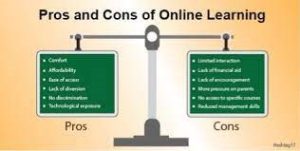
Pros:
- E-learning portals like websites, audio, videos, etc., are available 24 hours on the net. Hence, the user can access them whenever he desires.
- These portals can be accessed from any E-device like mobile, TV, laptop etc.,
- The latest information related to any topic can be availed from any part of the world with the help of the Internet.
- Professionals are benefiting from the flexibility of time so that they can upgrade their knowledge.
- Many certification courses are available online. Earlier acquiring them was a difficult task needing time and money along with travelling.
- demand for audio-video E-portals has increased because of the Slow speed of the Internet.
Cons:
- Limited internet connection
- Remote areas have slow-speed internet, as well as audio-video quality, is poor.
- E-learning portals are static, hence limited interaction of educator and learner often leads to many disadvantages of E-Learning portals.
- Not all the courses are feasible via the Internet, they need interaction with the educator often. Like games and arts.
- The E-Learning portals in Indian conditions find it difficult to reach end users.
- It is difficult for E-learner beginners to find which E-portal is their benefit.
- All the courses available via e-learning portals can be changed from time to time.
SWOT Analysis of Policies for E-Learning in India:

For the details please refer,
Reference: https://ijpsl.in/wp-content/uploads/2020/09/E-Learning_Hanaaya-Navaneeth.pdf
Is Online Education an Alternative to Face-to-Face Learning?
For the answer, please refer
https://ijpsl.in/wp-content/uploads/2020/09/E-Learning_Hanaaya-Navaneeth.pdf
Present Condition of e-learning in India:

- Steps are being taken for higher internet speed
- Making smartphones available to rural areas also
- Endless efforts are being made to make online learning available in each corner of the country.
- Low internet tariffs/, and cheap mobile phones are fruitful in support of government efforts.
- A variety of online courses are available from primary to professional levels.
- Many private companies and new ventures are providing a variety of services via E-Learning.
- India is growing in E-Learning due to the need to update skills and knowledge.
Is Online Education being commercially feasible? For the answer, please refer to “Project Synopsis of Online Education”.
Website address of famous two Startups in India:
Some of the famous E-Learning portals working in India are as follows:
To find the names of all the startups, please refer
Top 100 EdTech Companies in India: 2023 [Updated] (henryharvin.com)
Market and Social Impact of Online Education
For the details, please refer
https://ijpsl.in/wp-content/uploads/2020/09/E-Learning_Hanaaya-Navaneeth.pdf
Conclusion:
For Online Education Brief lots of research has been done.
Based on the study of various online research reports it can be concluded that
- Presently available offline institutions and new startups/, can opt for providing skill development training via online education.
- Creating awareness regarding the name of the Institution’s marketing efforts is needed.
- Traditional learning at the primary level can be replaced with E-Learning at home soon.
- E-learning offers various opportunities for Corporations to expand their business.
- Online educational concepts will be changed from time to time.


